Veteran Pathfinder
Helping a community in need get the tools to help themselves.

Designs and data have been modified and do not represent real products or systems.
Summary
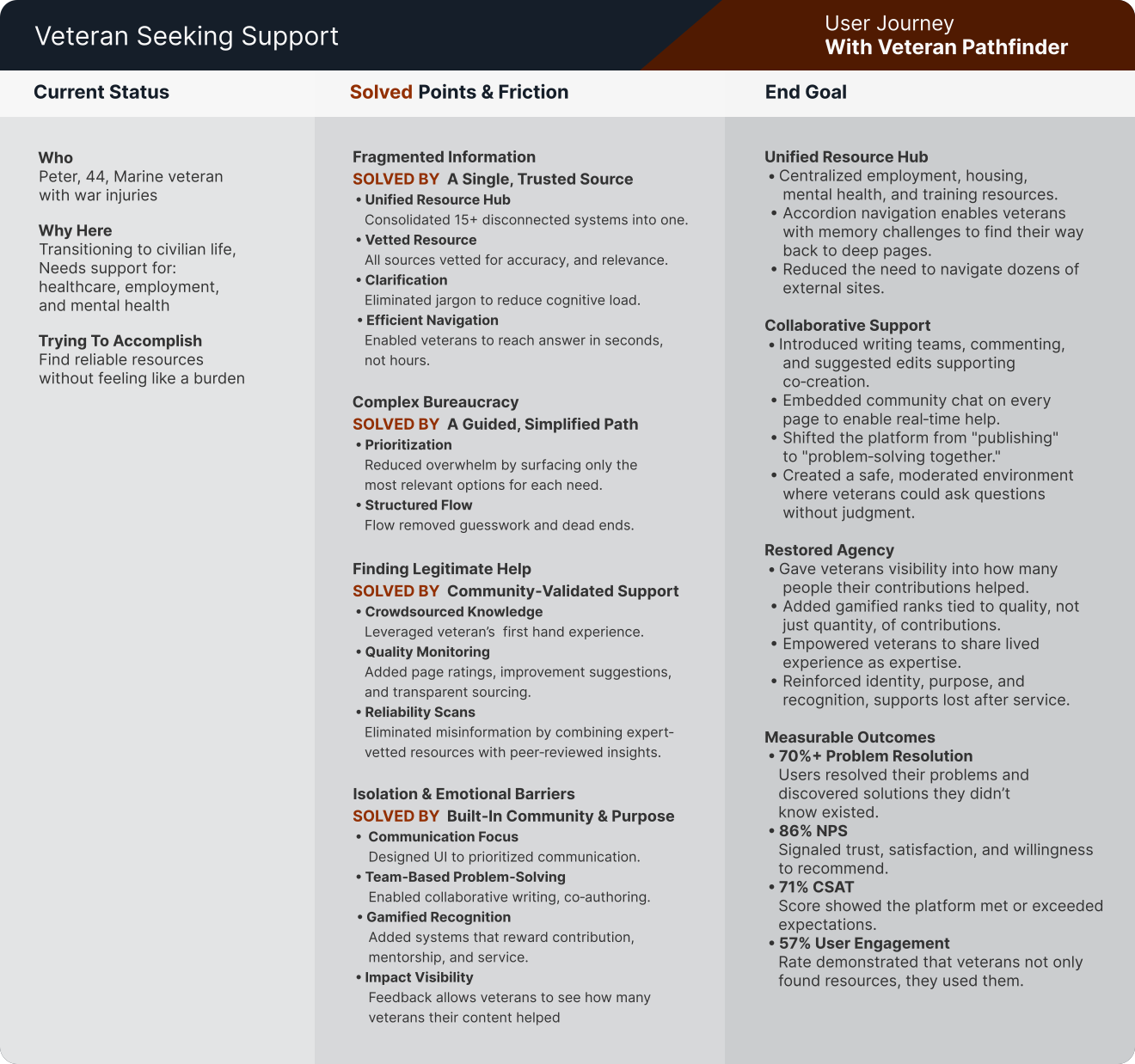
Over the course of this initiative, through a Lean UX process, I transformed fragmented veteran support resources into a unified, community‑driven platform that solves over 70%+ of veteran’s problems, thorough a Lean UX process.
Problem Resolution
Users found more solutions than they knew existed.
Net Promoter Score (NPS)
86% of users stated they would recommend the platform.
CSAT Customer Satisfaction Score
71% of users stated they were well satisfied.
Engagement Tracking
57% users used resources they found.
What is Veteran Pathfinder?
Veteran Pathfinder is a volunteer‑driven initiative designed to support U.S. military veterans as they transition into civilian life. The platform connects veterans to reliable resources, community‑generated insights, and peer‑supported problem‑solving, all in one trusted hub.
My Role
As a Product UX Designer I led the project end‑to‑end, including research, strategy, IA, wireframing, prototyping, usability testing, and UI design.
Platform
Responsive web application
UX Methods
User Research, Surveys, Competitive Audit, Information Architecture, Wireframing, Design Systems, Prototyping, Usability Testing
Tools
Figma, Google Suite, Adobe Suite
Challenge
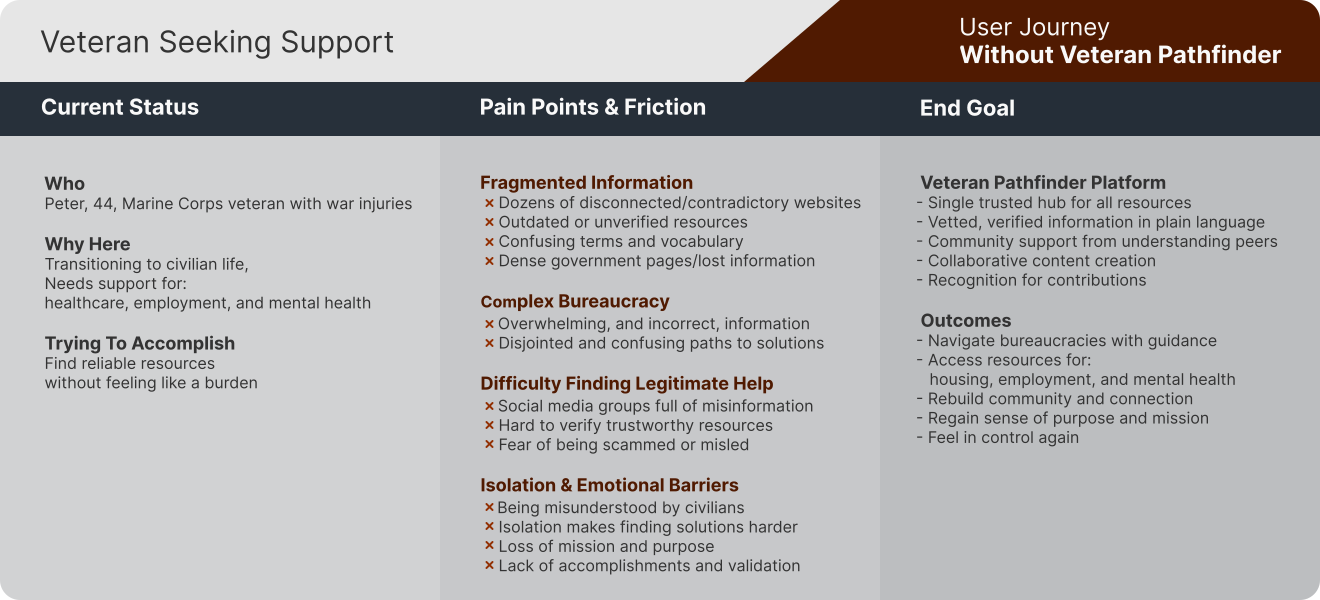
Designing for a complex, regulated domain without direct access to subject matter experts. Veterans face fragmented access to healthcare, mental health, and financial services across 15+ disconnected systems, a national-scale problem that many larger, better-funded organizations have struggled to solve.
A Human Problem
Assumption
We poor billions of dollars into organizations and assume our veterans are taken care of.
Truth
Across the nation, countless former service members are being pulled into a relentless storm of unemployment, poverty, depression, suicide, and homelessness. The very people who once stood guard for us now face a maze of fractured, unreliable resources that leave them fighting their battles alone.

Peter
The Survivor

Age 44
Marine Corps veteran who sustained injuries during service.
"I need a hand up, not a hand out."
Challenges
Chronic injuries from combat.
Difficulty finding accessible work due to physical limitations.
Feeling misunderstood by others who have not experienced similar trauma.
Core Needs
Connection with others who have experienced similar challenges.
Respect for physical limitations.
Find a community that values his knowledge and experience.
Behaviors
Regularly seeks medical advice for injury management.
Actively advocates for fellow veterans’ healthcare.
Joins online support groups for disabled veterans.
Attitudes
Reluctant to ask for help, but appreciates it when it is offered.
Passionate about helping others in similar situations.
Believes in personal strength and self-reliance, but recognizes the importance of community.
Empathy Map
Say"Getting benefits is a struggle, but life is a struggle."
"I’ll fight for what I deserve, even if it’s hard, even if it takes time."
"I’m strong enough to handle this, but I need support from those who understand what I have gone through. "
"I don’t want to be seen as broken."
Fights for better healthcare benefits for veterans.
Participates in adaptive sports and connects with other veterans online.
Empowered but also isolated in dealing with physical and mental scars.
Motivated to help but feels unsupported at times.
Energized by helping others.
Insights
Seeking a community that offers recognition of his knowledge.
Passionate about helping others.
Active in the veteran community.
What are Veterans Experiencing?
Through interviews, data analysis, and journey mapping, I uncovered six forces driving the crisis:

Trauma & Stress
When these collide with financial stress or isolation, the risk of crisis increases dramatically.
Employers not Understanding Military Experience
Skills like leadership under pressure, discipline, logistics, and teamwork are incredibly valuable; yet civilian employers often don’t understand them.
Cultural Gap
Having the job skills needed, but unfamiliar norms and expectations, often results in unemployment.

Overwhelming Bureaucracies
Many veterans fall through the cracks simply because the system is too hard to navigate alone.
Social Support Drop
In civilian life, people are expected to build their own networks from scratch. Isolation becomes a real risk, and isolation is a known accelerator of depression, substance misuse, and suicidal ideation.
Loss of Identity
Leaving that behind can feel like stepping off a cliff. Many veterans describe it as losing not just a job, but a sense of who they are.

Root Cause
It wasn't a lack of resources.
It was the lack of a guided path.
Veterans were navigating:
- Dozens of disconnected websites
- Dense government pages
- Confusing eligibility rules
- Outdated or irrelevant resources
They needed one trusted hub, not a maze.
Problem Statement
How might we support veterans in lifting one another up through accessible online resources that ease the emotional, social, and practical challenges of transitioning to civilian life?